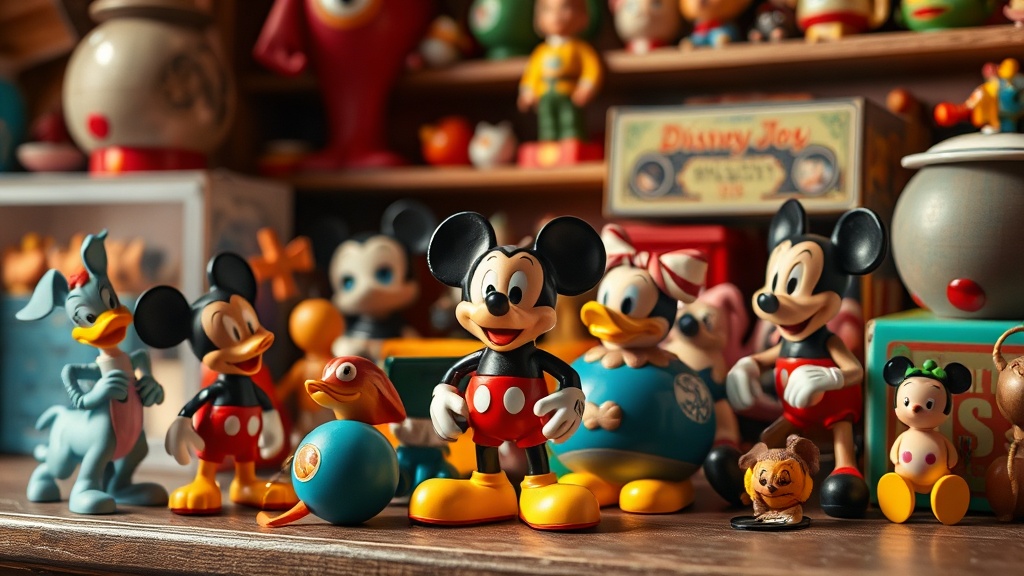
Why Do Some Vintage Disney Toys Fetch Thousands While Others Gather Dust?

Why Do Some Vintage Disney Toys Fetch Thousands While Others Gather Dust?
What separates a $5 Mickey Mouse plush from a $5,000 vintage Steamboat Willie wind-up toy? If you've ever wandered through estate sales or scrolled through eBay listings wondering why certain pieces command jaw-dropping prices while seemingly similar items barely sell, you're not alone. The world of vintage Disney collectibles operates on its own logic—one that blends nostalgia, scarcity, condition, and that elusive "it factor" collectors chase for decades.
This guide breaks down what actually drives value in the vintage Disney market. We'll look at the specific traits that transform ordinary memorabilia into auction house stars, explore the most sought-after categories, and help you understand what to watch for whether you're building a collection or just curious about that box of childhood treasures in your attic.
What Makes a Vintage Disney Item Actually Valuable?
First, let's dispel a common myth: age alone doesn't make something valuable. Your grandmother's 1950s Mickey Mouse watch might be charming, but if it's missing its band, has a cracked crystal, and was produced by the millions, its market value could be under $50. Meanwhile, a pristine 1930s Mickey Mouse toothbrush holder from the same era might sell for $800—not because it's more useful, but because far fewer survived.
Rarity sits at the top of the value hierarchy. Disney licensed its characters to hundreds of manufacturers throughout the 20th century, and production runs varied wildly. Items made for short promotional periods, regional markets, or special events often became the holy grails of collecting. Take the 1935 Mickey Mouse "Pencil Pointer" mechanical toy by Lionel—only a handful exist in complete, working condition, and examples have sold for over $15,000 at auction. Compare that to the ubiquitous 1970s Mickey Mouse watches, where even pristine examples rarely break $200.
Condition matters enormously, too. In the collectibles world, "mint in box" (MIB) or "mint on card" (MOC) can multiply a piece's value tenfold. Original packaging isn't just cardboard—it's historical documentation. The box tells us when and where something was made, confirms authenticity, and protects the item from the wear that decades of display or storage inflict. A 1960s Pez dispenser loose might fetch $30; the same piece on its original card could command $300 or more.
Manufacturer pedigree also shapes desirability. Certain companies—Lionel for trains, Ideal for dolls, Effanbee for character figurines—carried reputations for quality that collectors still respect. Items from these makers typically outperform generic souvenirs, even when depicting the same characters.
Which Vintage Disney Categories Are Collectors Hunting Right Now?
The vintage Disney market has several "food groups" that serious collectors focus on. Understanding these categories helps you spot opportunities and avoid overpaying for common pieces.
Character merchandise from the 1930s and 1940s represents the earliest and often most valuable segment. This era—spanning from Mickey's 1928 debut through World War II—included toys, household items, school supplies, and clothing featuring the rapidly expanding Disney character stable. Mickey dominated, of course, but early Donald Duck, Snow White and the Seven Dwarfs (1937), and Pinocchio (1940) merchandise also commands strong prices. Look for pieces marked with "Walt Disney Enterprises" or "W.D. Enterprises" rather than the later "Walt Disney Productions"—earlier marks generally indicate older, rarer items.
Disneyland opening-era memorabilia (1955-1960) has surged in popularity as the park's 70th anniversary approaches. Original admission tickets, ride posters, employee uniforms, and souvenirs from Disneyland's first years carry special significance. The park's unprecedented success created instant nostalgia, but early items weren't preserved systematically—most were used, worn, or thrown away. A complete 1955 Disneyland guidebook in excellent condition can sell for $200-400, while rare ride tickets from opening day have fetched over $1,000.
Animation art and cels occupy a specialized corner of the market. Original production cels (the transparent sheets animators painted characters onto) from classic features became available to collectors starting in the 1970s when Disney began selling them through galleries and the Disney Art Program. Earlier is generally better—a Snow White cel from 1937 outvalues a Rescuers cel from 1977 by orders of magnitude. But condition, character prominence, and scene significance all factor in. Beware of "limited edition" cels produced specifically for the collector market—these decorative pieces, while attractive, don't carry the historical weight (or investment potential) of actual production art.
Disneyana from international markets offers fascinating collecting opportunities. European, Japanese, and Latin American Disney merchandise often featured different designs, higher production values, or characters less common in American products. Japanese Disney toys from the 1960s and 70s, for instance, frequently boasted superior materials and construction to their American counterparts. The Japanese Disney market remains strong today, with vintage pieces crossing borders regularly through online marketplaces.
How Can You Tell If Your Vintage Disney Find Is Legitimate?
Authentication keeps vintage Disney collectors up at night. The most desirable items have been counterfeited, reproduced, or "aged" by unscrupulous sellers for decades. Learning to spot the real deal takes practice, research, and a healthy skepticism about "too good to be true" discoveries.
Start with markings and construction. Authentic vintage Disney items typically carry manufacturer marks, copyright notices, or Disney licensing information. These weren't always consistent—Disney's licensing system evolved considerably over the decades—but genuine pieces usually show attention to detail that fakes lack. Molded plastic items should have clean seams and consistent material quality. Painted surfaces should show appropriate wear patterns for their claimed age (uniform "distressing" often signals artificial aging).
Reference materials are your friends. Several comprehensive price guides and reference books document known vintage Disney items with photographs, markings, and production information. The "Walt Disney's Mickey Mouse Memorabilia: The Vintage Years 1928-1938" by Robert Heide and John Gilman remains key for early merchandise. Online databases and collector forums can help identify and authenticate pieces, though you should verify information across multiple sources.
Provenance—documented ownership history—adds significant value and confidence. An item with a photograph showing it in context decades ago, a receipt from an original purchase, or documentation from a known collection carries weight that mystery pieces lack. Smart collectors save everything: original purchase receipts, auction catalogs, correspondence with previous owners.
When buying, work with reputable dealers who guarantee authenticity and accept returns. Major auction houses (Heritage Auctions, Morphy Auctions) have Disney specialists who vet consignments. Collector shows and Disneyana conventions offer opportunities to handle authentic pieces, learn from experienced collectors, and build relationships with trustworthy sellers.
Where Should You Start If You're Building a Vintage Disney Collection?
Whether you're investing seriously or collecting for personal enjoyment, having focus helps. The vintage Disney universe is vast—spanning nearly a century, thousands of characters, and millions of different items. Trying to "collect Disney" broadly leads to scattered acquisitions and wasted money.
Consider specializing by era, character, manufacturer, or item type. Some collectors focus exclusively on 1930s Mickey Mouse merchandise. Others collect only Donald Duck items, or pieces from a specific manufacturer like Gund or Knickerbocker. Narrow focus lets you develop deep expertise, recognize bargains quickly, and build a collection with coherence and story.
Set a budget and stick to it. It's easy to get caught up in auction fever or dealer pressure, but sustainable collecting happens within financial limits. Decide what you're comfortable spending monthly or annually, and prioritize pieces that fit your collecting goals. Sometimes passing on a mediocre piece leaves resources for a truly exceptional find six months later.
Condition versus rarity presents the classic collector's dilemma. A rare piece in poor condition might cost less than a common piece in perfect shape—but which serves your goals better? Many collectors prefer "very good" condition examples they can actually handle and display over "museum grade" pieces that must stay locked away. Others chase investment-grade specimens regardless of practicality. There's no wrong answer—just your answer.
Finally, connect with the community. Disneyana fan clubs, online forums, social media groups, and collector conventions offer knowledge, camaraderie, and buying opportunities you won't find browsing eBay alone. The Disneyana Fan Club has chapters nationwide and publishes regular newsletters covering the hobby. Experienced collectors often mentor newcomers, sharing hard-won knowledge that books and price guides can't capture.
Is Vintage Disney Collecting Worth the Effort in Today's Market?
For all its challenges—authentication worries, condition obsession, competitive auctions—vintage Disney collecting rewards those who persist. There's genuine magic in holding a piece of material culture that connected children to these characters decades ago. That 1930s Mickey Mouse toy represented wonder and imagination to its original owner, just as Disney stories do for kids today. Collecting preserves that continuity.
Financially, the market has proven resilient. While speculative bubbles have come and gone (remember the Beanie Babies parallel?), genuine rarities from Disney's early decades have appreciated steadily. Pieces that sold for hundreds in the 1980s now command thousands. The demographic tailwind helps, too—Baby Boomers with disposable income and childhood Disney memories are actively acquiring the toys they couldn't afford as kids.
But the real value isn't measured in dollars. It's in the hunt, the research, the relationships built with fellow collectors, and the satisfaction of preserving pieces of cultural history. Whether your collection fills a display case or a warehouse, each piece tells a story about American popular culture, manufacturing history, and the remarkable staying power of Walt Disney's creative vision.
So check those attic boxes. Visit those estate sales. Browse those antique malls with educated eyes. The next great vintage Disney find might be waiting—dusty, overlooked, and ready for a new chapter in its long story.