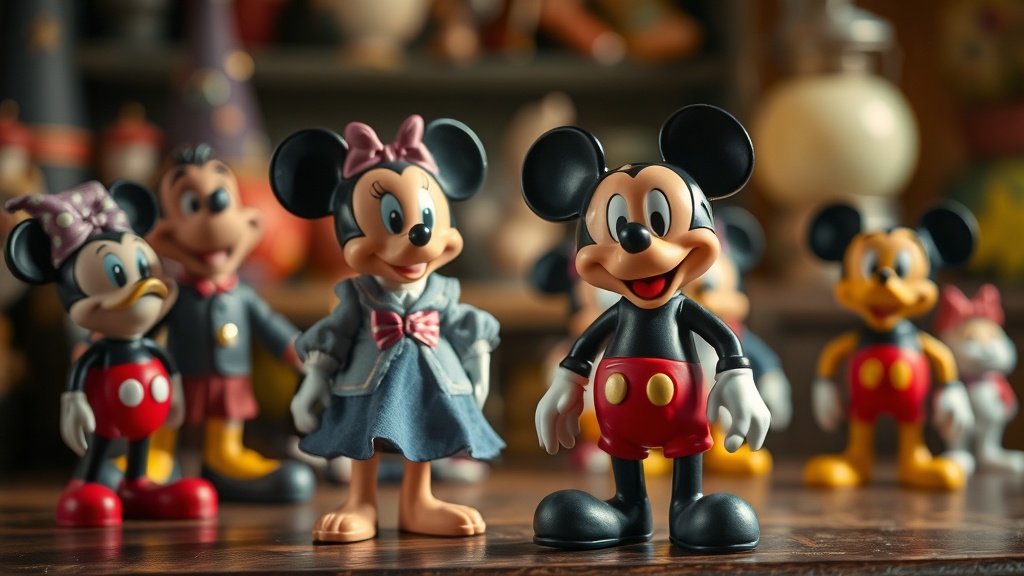
Uncovering Authentic Histories: Identifying Vintage Disney Character Figures

Uncovering Authentic Histories: Identifying Vintage Disney Character Figures
Imagine browsing an antique store, your eyes scanning shelves filled with forgotten treasures, when a small, familiar silhouette catches your attention. It’s a figure—perhaps a classic Mickey Mouse, or maybe a less common character like one of the Seven Dwarfs—but something about its patina and general feel suggests it’s not a modern reproduction. You pick it up, curiosity piqued. Is this a genuine piece of Disney history, or merely a cleverly crafted imitation? This guide unpacks the essential characteristics and evaluation methods for identifying authentic vintage Disney character figures, ensuring your collection reflects genuine artistry and history.
Understanding the nuances of early Disney collectibles isn’t just about verifying monetary value; it’s about preserving a tangible connection to animation’s golden age. From the delicate celluloids of the 1930s to the pioneering plastics of the post-war era, each genuine figure tells a story. We’ll explore how to discern authenticity through material analysis, hallmark identification, and an understanding of historical manufacturing practices, empowering you to confidently distinguish between true vintage finds and their later counterparts.
What Are the Hallmarks of Genuine Early Disney Character Figures?
Authenticity in vintage Disney figures often comes down to a careful examination of their construction and the marks left by their creators. The earliest commercial Disney figures, emerging in the 1930s, frequently utilized materials like celluloid, bisque, or composition. Celluloid figures, imported largely from Japan, are incredibly lightweight, often hollow, and possess a distinct gloss. They can also exhibit a characteristic odor (like camphor) when gently warmed and are susceptible to deterioration known as “celluloid disease,” which manifests as cracking, discoloration, or even a vinegary smell. Bisque figures, typically German-made, feature a matte, unglazed porcelain finish and a heavier, more delicate feel. Composition figures, a mix of materials like sawdust, glue, and resin, are sturdier but can show cracking or chipping over time.
As manufacturing evolved, so did the materials. Post-war figures transitioned to early plastics such as Bakelite, cellulose acetate, and later, vinyl. Bakelite figures are dense, often have a warm, smooth feel, and might exhibit a faint chemical odor when rubbed. Cellulose acetate, while more stable than celluloid, can still suffer from degradation, becoming brittle or developing surface crazing. The key is to match the material to the era and known manufacturers. A supposed 1930s figure made of soft vinyl, for instance, immediately raises red flags.
Manufacturer’s marks and copyright information are perhaps the most definitive indicators. Look for molded or painted marks that include the character’s name, “Walt Disney Productions,” or “W.D.P.” (sometimes abbreviated), often alongside the manufacturer’s name. Companies like