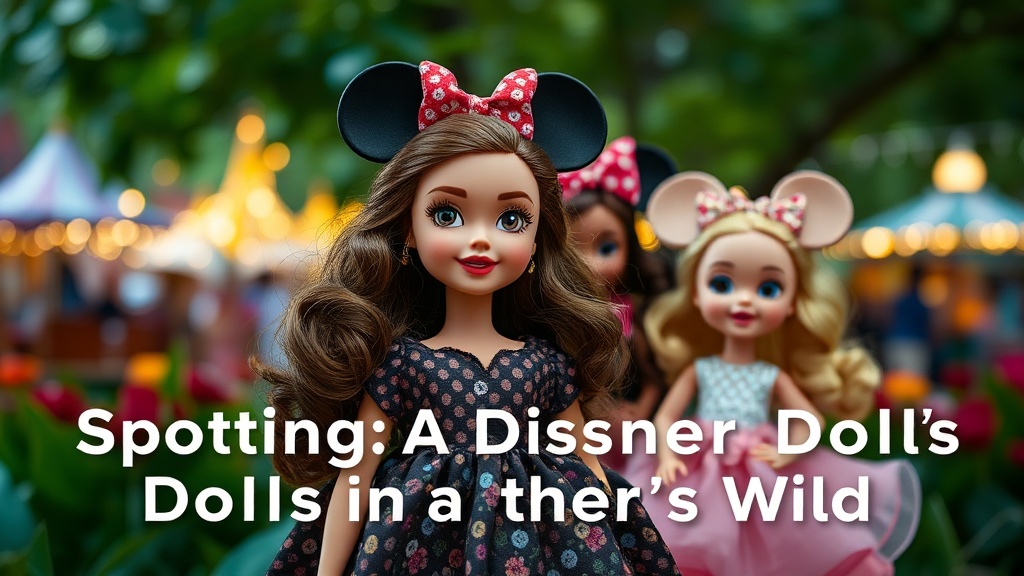
Spotting Authentic Disney Designer Dolls in the Wild

The Hidden World of Counterfeit Disney Dolls
Over 30% of high-end toy replicas found on major third-party marketplaces are actually unauthorized counterfeits. This post provides the specific physical markers you need to identify genuine Disney Designer Dolls—including the highly sought-after LTD series—to ensure you aren't paying premium prices for a knockoff. We'll look at packaging, material quality, and manufacturing stamps.
Finding a rare doll at a thrift store or a local collector's meet is a rush. But that rush turns into a headache when you realize the "limited edition" item you just bought is a fake. It happens more often than you think. Collectors often get blinded by a shiny box and miss the glaring red flags.
How Can You Identify a Fake Disney Designer Doll?
You identify a fake by inspecting the weight, the stitching quality, and the specific manufacturer markings on the doll's body. Authentic Disney Designer Dolls—often produced through partnerships with brands like Disney Traditions or specialized high-end toy manufacturers—have a level of detail that cheap imitations simply cannot replicate.
First, look at the eyes. Genuine Disney dolls usually feature high-quality, painted, or inset eyes that have a certain depth. Fakes often have "flat" eyes that look painted on with low-quality pigment. If the eyes look slightly asymmetrical or have a "dead" stare, walk away.
Check the hair. Real designer dolls use high-grade synthetic fibers that have a specific sheen and weight. Counterfeit versions often use cheap, shiny plastic-like hair that feels scratchy or looks unnaturally bright under light. This is a common way to spot a low-quality reproduction. If you've ever dealt with keeping your Disney figurines pristine, you know that even the smallest dust particles can settle in the grooves of a fake's poorly-molded hair.
The weight is a big one. A real collector's item has a balanced, substantial feel. If the doll feels light or hollow, it's a bad sign. It's not just about the plastic; it's about the density of the materials used in the limbs and torso.
The Packaging Test
The box is often the first giveaway. A lot of scammers use generic boxes with slightly off-color printing. If the colors look washed out or the logo looks "fuzzy," you're likely looking at a reproduction.
- The Logo: The Disney font is incredibly specific. Check for any slight variations in the "D" or the spacing of the letters.
- The Seal: Authentic products often have specific holographic stickers or specialized seals that are difficult to replicate.
- The Weight of the Box: A high-quality box is sturdy. If the cardboard feels flimsy or thin, it probably isn't an official product.
Where is the Disney Trademark Located?
The Disney trademark or manufacturer's mark is typically located on the back of the doll's neck, the bottom of the feet, or the interior seam of the clothing. On high-end collector items, these marks are embossed or printed with extreme precision.
If you can't find a mark anywhere, that's a huge red flag. Even "unbranded" vintage items usually have some form of manufacturer stamp. For modern designer dolls, the absence of a copyright symbol (©) or a trademark (™) near the manufacturer's name is a dead giveaway. You can check the official Disney website for product descriptions to see what the official branding should look like.
I once saw a "limited edition" doll where the copyright text was so small it was actually illegible. That's not a manufacturing quirk—it's a tactic to hide the lack of a real trademark. If you need a magnifying glass to see if a brand name is even there, it's probably not real.
| Feature | Authentic Designer Doll | Counterfeit/Fake Doll |
|---|---|---|
| Eyes | Depth, gloss, precise paint | Flat, matte, or blurry |
| Hair | Soft synthetic, realistic sheen | Shiny, stiff, "plastic" feel |
| Packaging | Crisp colors, holographic seals | Faded colors, no official seals |
| Markings | Embossed or clear copyright | Missing or illegible text |
How Much Should an Authentic Disney Doll Cost?
The cost of an authentic Disney Designer Doll varies wildly based on the rarity of the edition and the current secondary market demand. You won't find a single fixed price, but you can establish a baseline by looking at recent completed sales on reputable auction sites.
Don't be fooled by "too good to be true" prices. If a doll that usually sells for $300 is listed for $45 on a random marketplace, it's a replica. Period. Collectors often try to justify these low prices by saying it's a "sale" or "liquidation," but in the world of high-end Disney collectibles, that's rarely the case.
Worth noting: the value of these items is driven by scarcity. A true Limited Edition (LE) run is strictly controlled. If you see hundreds of the "same" rare doll available at low prices, the scarcity is a lie. It's a common tactic used by mass-producers of knockoffs to trick unsuspecting buyers into thinking they've found a deal.
Always check the historical data. Look at what the item has actually sold for in the past. If you're looking into other types of Disney merchandise, like collecting Disney Funko Pops, you'll notice a similar pattern: the more "special" the edition, the more strictly the price is defended by the community.
If you are buying from a private seller, ask for more photos. Specifically, ask for a macro shot of the feet or the neck. A seller who is willing to provide high-resolution, close-up shots of the manufacturer's marks is much more likely to be selling a genuine item. If they refuse or say the photos are "too blurry to see," they're likely hiding something.
One last thing—watch the seams. On a high-end doll, the stitching is nearly invisible or perfectly uniform. On a fake, you'll see loose threads, uneven spacing, or even visible glue residue where the fabric meets the plastic. This is a sign of mass production in a factory that doesn't prioritize quality control.