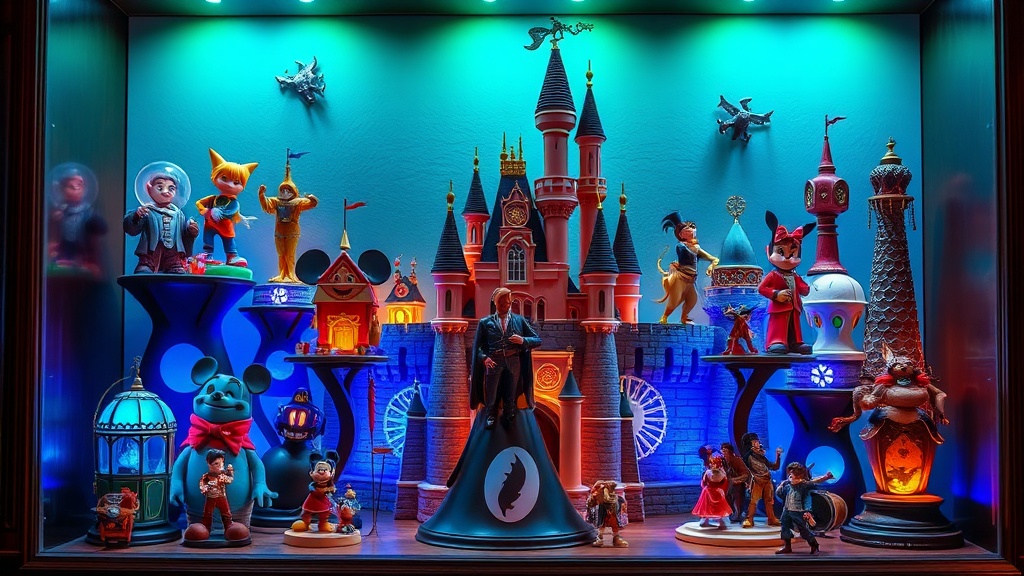
How to Build a Disney Collectible Display That Grows With Your Collection

Why Most Collectible Displays Fail Within Two Years
Here's the hard truth most collectors learn too late—that pristine shelf setup you spent a weekend perfecting? It's going to feel cramped within eighteen months. Maybe sooner if you're hunting limited releases or trading actively. The instinct to create a "permanent" display is understandable (we all want that Instagram-worthy showcase), but it ignores a fundamental reality of collecting: your collection isn't static. Static solutions create future headaches—forced rearrangements, overcrowded cases, and the dreaded "storage box shuffle" where prized pieces rotate in and out of view based on seasonal mood rather than intentional curation.
This guide dismantles the "set it and forget it" approach and replaces it with scalable systems. We're talking modular foundations, flexible mounting, and smart use of vertical space—strategies that accommodate growth without requiring complete teardowns every time you add a Grail piece. Whether you're working with a dedicated collector's room or a corner of your Oakland apartment, these principles scale to your situation.
How Do I Choose Display Furniture That Won't Limit Future Growth?
The cornerstone of any expandable display is furniture that adapts rather than constrains. Fixed-shelf bookcases are the enemy here—those predetermined twelve-inch intervals between shelves don't care about your towering Sorcerer Mickey figure or your delicate pin shadowbox. Instead, look for adjustable shelving systems like IKEA's BOAXEL or ELVARLI lines, or industrial wire shelving units common in restaurant supply stores. These allow you to reconfigure shelf heights without tools, accommodating everything from tiny Vinylmation figures to oversized snow globes as your collection evolves.
Depth matters more than most collectors consider. Standard bookcases run eleven to twelve inches deep—fine for books, but limiting for three-dimensional collectibles that need breathing room. Aim for fifteen to eighteen inches of depth minimum. This extra space serves dual purposes: it prevents pieces from feeling crowded against the back panel, and it creates room for layered displays where smaller items sit forward while larger pieces anchor the rear.
Consider furniture on casters, even for seemingly permanent installations. A rolling display case or movable shelving unit transforms your options. Need to photograph new acquisitions? Roll the unit to natural light. Hosting other collectors? Reposition for traffic flow. The psychological flexibility of movable furniture also prevents that "stuck" feeling when you want to experiment with new arrangements.
The Case for Modular Cubby Systems
Cube storage systems—think IKEA KALLAX or similar modular units—offer exceptional versatility for Disney collectors. Each cube becomes a dedicated zone: Designer Dolls in one, pin boards in another, Funko Pops stacked vertically in a third. The genius lies in expansion—add another column of cubes when needed, or reorient individual cubes horizontally versus vertically based on what you're displaying.
Customize cubes with interior fittings that maximize utility. Acrylic risers create tiered visibility for smaller items. Glass or acrylic shelves inserted within cubes double your vertical real estate. Some collectors install small LED strip lights inside individual cubes, creating illuminated vignettes that draw attention to featured pieces without lighting the entire collection uniformly.
What's the Best Way to Use Vertical Space Without Creating a Cluttered Look?
Vertical expansion is where collections thrive or die aesthetically. Stack too aggressively and you've got a cluttered thrift store vibe; ignore vertical opportunities and you're wasting precious square footage. The solution lies in visual breathing room and intentional hierarchy.
Start with the "museum rule"—galleries typically hang artwork at eye level (roughly 57-60 inches from floor to center of piece) because that's where human attention naturally settles. Apply this to your display: your absolute favorite pieces, your rarest acquisitions, the items that spark joy every time you see them—these occupy prime eye-level real estate. Less significant items fill upper and lower zones.
Wall-mounted displays solve floor space constraints while adding dimension. Shadow boxes designed for pins or medals work beautifully for Disney trading pins—mount several in a grid pattern that can expand outward as your pin collection grows. Acrylic wall shelves (the "invisible" kind popular for vinyl figure displays) create floating effects that don't visually weigh down a room.
For ceiling-height displays, invest in a library ladder or sturdy step stool that lives nearby. If upper shelves require effort to access, you'll naturally reserve them for seasonal rotations or long-term storage pieces rather than daily-view favorites. Some collectors install motorized TV lifts repurposed for display cases—press a button and your upper-shelf Grail piece descends to eye level. Dramatic? Absolutely. But collecting is partly theater.
How Can I Protect Collectibles While Keeping Them Accessible?
Growth-oriented displays must balance protection with access. Nothing kills collecting enthusiasm like knowing your favorite piece lives in a buried box requiring twenty minutes of excavation. Simultaneously, leaving everything exposed courts dust, UV damage, and accidental bumps.
Acrylic cases with magnetic lids offer the best of both worlds. They protect against dust while allowing instant access for inspection, photography, or simply holding the piece (admit it—you do this). For larger collections, consider a hybrid approach: open shelving for "daily drivers" (common pieces you handle regularly) and enclosed cases for valuable or delicate items. This creates visual rhythm—open areas feel approachable while glass-front sections signal "special collection."
UV protection deserves serious attention for any display with natural light exposure. Standard glass blocks roughly 25% of UV radiation; UV-filtering acrylic blocks 98%. The investment difference is significant but pays for itself if it prevents one sun-faded Limited Edition doll from losing value. Position displays away from direct sunlight when possible, and consider removable UV-filtering film applied to windows as a secondary defense.
Climate control extends beyond obvious humidity concerns. Collectibles stored near exterior walls experience temperature swings that interior walls avoid. This matters for materials like resin (which can crack with thermal expansion) and paper-based collectibles (susceptible to condensation during temperature shifts). Leave space between items and walls for air circulation—crowding creates microclimates where moisture lingers.
Rotation Systems That Actually Work
The reality of growing collections: you can't display everything simultaneously. Successful collectors develop rotation rhythms. Some organize by seasonal themes—Halloween Disney villains in October, winter holiday pieces in December, springtime characters in April. Others rotate based on acquisition dates, giving new pieces three months of display prominence before cycling in older items.
Whatever your system, document it. Photograph each display arrangement before changing it. Create simple spreadsheets tracking what's currently displayed versus stored. This documentation proves invaluable for insurance purposes (more on that below) and prevents the "where did I put that?" panic when hunting specific pieces.
Insurance and Documentation Strategies for Growing Collections
Speaking of insurance—your homeowner's or renter's policy almost certainly undervalues your collection. Standard policies cap collectible coverage at laughably low amounts (often $1,000-$2,500 total) and may not cover market appreciation. As your display grows, so should your protection.
Photograph every piece individually against neutral backgrounds with scale references (rulers or coins). Capture maker's marks, edition numbers, and any certificates of authenticity. Store these images cloud-backed with metadata including purchase date, price, and current estimated value. For high-value collections, consider specialized collectibles insurance through providers like CollectInsure or Hagerty, which offer agreed-value policies based on professional appraisal rather than depreciated replacement cost.
Create a "red folder" (physical or digital) containing purchase receipts, authentication documentation, and restoration records. If disaster strikes—fire, theft, flood—this documentation determines whether you recover fair value or accept lowball settlements. Update this folder quarterly as you acquire new pieces.
When Should I Consider Professional Display Solutions?
DIY display solutions serve most collectors well through their first few hundred pieces. But thresholds exist where professional help becomes cost-effective. If your collection includes museum-grade pieces (original production cels, vintage Disneyland props, signed memorabilia), consult with museum display specialists who understand conservation mounting and archival materials.
Custom built-ins represent significant investment but maximize awkward spaces—under staircases, attic conversions, narrow hallway niches. A skilled carpenter can create displays that appear architectural rather than added-on, with integrated lighting, hidden cable management, and climate control ducting. For inspiration, browse the Collector's Weekly community galleries, where serious collectors share their custom installations.
The decision point typically arrives when rearranging your display requires professional assistance (electricians for lighting, movers for heavy cases) or when piece values justify insurance riders that mandate specific security and environmental controls. Until then, the modular, adjustable approach outlined here scales remarkably far—many collectors maintain thousand-piece displays using these principles without custom builds.
Your collection tells a story. Give it room to keep writing new chapters.