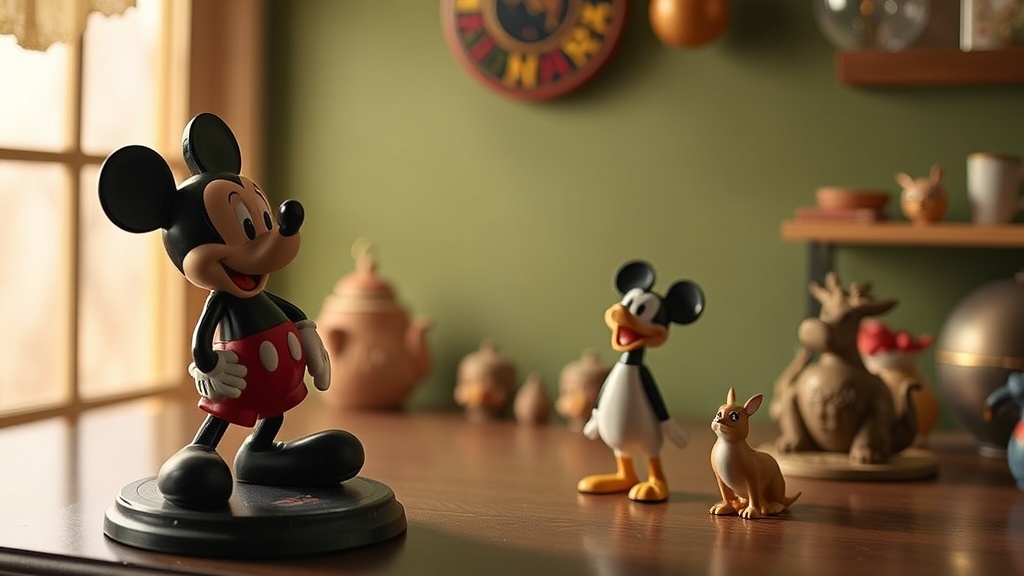
5 Vintage Disney Collectibles That Could Be Worth a Fortune

1959 Original Disneyland Map Hand-Drawn by Walt Disney
Original 1937 Snow White and the Seven Dwarfs Cel
Limited Edition Disney Designer Collection Dolls
Rare Disney Pins from Early Pin Trading Events
First Edition Mickey Mouse Watches from the 1930s
That attic box gathering dust? It might hold treasures worth more than a used car. Vintage Disney collectibles have exploded in value over the past decade, with certain items fetching five and even six figures at auction. This post breaks down five specific categories of Disney memorabilia that serious collectors are hunting right now—and what separates the valuable pieces from the yard sale rejects.
What Makes Old Disney Items So Valuable?
Rarity drives the market. Disney produced millions of souvenirs over the past century, but only a fraction survived in pristine condition. Factory errors, limited production runs, and items tied to specific park openings or film releases command premium prices.
The collector community—folks who gather at expos like the D23 Expo and trade on forums like MousePlanet—has developed sophisticated grading standards. Condition matters enormously. A 1950s Mickey Mouse watch with its original box and paperwork might sell for $3,000. The same watch without the box? Maybe $400. That original packaging—called "provenance" in the trade—often represents 70% of an item's value.
Here's the thing: Disney's own corporate archive doesn't even have complete records of everything produced. Disney licensed manufacturing to hundreds of companies—Timex for watches, Lionel for trains, Marx for toys. Each contract produced different runs, variations, and occasional weird anomalies that collectors now prize.
Which Vintage Disney Toys Are Worth the Most Money?
Early Disneyland park-exclusive toys from the 1955-1965 era top the list, particularly mechanical banks, tin-litho vehicles, and character figurines produced by companies like Marx, Irwin, and Gund.
The holy grail? The 1955 Marx Mickey Mouse Carousel. Marx produced this tin wind-up toy exclusively for Disneyland's opening year. Original examples in working condition with the original Disneyland price sticker (usually 98 cents) have sold for $15,000 to $25,000 at auction. The catch? Marx also produced a nearly identical version for general retail without the Disneyland marking. That version sells for around $300. The difference is a tiny embossed "Disneyland" on the base—easy to miss, expensive to overlook.
Lionel's Disney trains represent another high-value category. The 1935 Lionel Mickey Mouse Circus Train set—in its original box—fetched $85,000 at a Morphy Auctions sale in 2022. Lionel produced these hand-painted tin trains during the height of the Great Depression, making them rare from the start. Most families couldn't afford them; fewer still preserved them.
Worth noting: Condition standards for vintage toys are brutal. "Mint" means factory-fresh—no scratches, no fading, no replacement parts. "Excellent" allows minor wear. Anything below "very good" appeals mainly to collectors filling gaps affordably, not investors seeking appreciation.
Are Old Disney watches and clocks valuable?
Yes—particularly 1930s-1950s Ingersoll and Timex character watches, plus the esoteric "mickey mouse" alarm clocks produced by Bradley and Westclox.
The original 1933 Ingersoll Mickey Mouse wristwatch started the entire character watch industry. Walt Disney personally approved the design—Mickey's arms pointing to the hours and minutes, his white gloves standing out against the black dial. Ingersoll sold 11,000 units the first day. Today, a first-year Ingersoll with its original leather strap and unpolished case commands $2,500 to $5,000. Early examples feature distinctive details: square crown (the winding knob), sub-seconds dial at 6 o'clock, and "Ingersoll" printed below Mickey's feet.
Bradley produced alarm clocks from the late 1930s through the 1960s. Their 1938 "Mickey Mouse Alarm"—the one where Mickey's arms point to the time and his feet pendulum back and forth—sells for $800 to $2,000 depending on condition. Rarer still: the 1940s "Donald Duck" version. Bradley made far fewer Donalds, and surviving examples often command 40% premiums over comparable Mickey pieces.
Timex entered the Disney game later (1950s-1970s) but produced some genuinely scarce variations. The 1958 "Mickey Mouse Electric"—Timex's first battery-powered character watch—had a troubled production run. Many were returned under warranty. Pristine examples with original documentation routinely sell for $1,200 to $1,800.
Disney Timepiece Value Comparison
| Item | Era | Condition | Estimated Value |
|---|---|---|---|
| Ingersoll Mickey Mouse (first edition) | 1933-1934 | Mint with box | $4,000 - $8,000 |
| Ingersoll Mickey Mouse | 1933-1934 | Excellent, no box | $1,500 - $3,000 |
| Bradley Mickey Alarm Clock | 1938-1945 | Working, original paint | $800 - $2,000 |
| Bradley Donald Duck Alarm | 1940s | Working, original paint | $1,200 - $2,800 |
| Timex Mickey Electric | 1958-1962 | Mint with papers | $1,200 - $1,800 |
| Lionel Mickey Mouse Circus Train (set) | 1935 | Boxed, complete | $50,000 - $100,000+ |
What about vintage Disney animation art and cels?
Original production cels (short for celluloid, the transparent sheets animators painted) from Disney's golden age represent the most visually striking collectibles—and among the most complex to value properly.
Here's where collectors get tripped up. Disney sold "sericels" (screen-printed reproductions) and "limited edition cels" (hand-painted recreations) starting in the 1970s through their Disney Art Program. These are decorative, not investment-grade. A 1990s limited edition Little Mermaid cel might cost $200 framed. It'll likely sell for $50 today.
Actual production cels from 1930s-1950s features are different animals entirely. These were used in filming—paint applied to celluloid sheets, photographed over painted backgrounds, then often discarded or given to employees. Snow White and the Seven Dwarfs (1937), Pinocchio (1940), Fantasia (1940), and Cinderella (1950) cels command the highest prices.
A genuine Pinocchio production cel featuring the title character—verified by Disney's archival records and accompanied by a certificate from a reputable dealer like Animation Art Conservation—can sell for $5,000 to $25,000 depending on image size, character prominence, and condition. Villains cost more. Heroes cost more. Full-figure images dwarf "waist-up" close-ups.
That said, the authentication challenge is real. Unscrupulous sellers have been known to paint new cels on old celluloid, apply forged Courvoisier Gallery labels (the prestigious San Francisco dealer Disney partnered with in the 1940s), and create convincing fake backgrounds. Buy only from established dealers with return policies. Insist on provenance documentation. If the price seems too good—it's fake.
Do Disney park memorabilia and souvenirs have collectible value?
Absolutely—particularly "opening year" items from Disneyland (1955), Walt Disney World (1971), EPCOT Center (1982), and Disneyland Paris (1992).
Attraction posters represent the most wall-worthy (and investment-worthy) category. Disneyland's original silk-screened attraction posters from 1955-1965 were produced in limited quantities, displayed for months or years, then often discarded. A genuine "Rocket to the Moon" poster from 1955—35 by 45 inches, vibrant Tomorrowland styling—sold for $28,000 in 2019. Even smaller "gate flyer" handouts from opening day fetch $500 to $1,000.
Tickets and ticket books offer more accessible entry points. The original 1955 "A through C" ticket books—remember when rides required separate tickets?—in unused condition sell for $200 to $400. Complete sets of early 1970s Walt Disney World tickets, particularly the rare "E" tickets for premium attractions, command $100 to $300 per book.
Park-exclusive pins have created their own obsessive subculture. Disney started the "Official Disney Pin Trading" program in 1999, but cast member exclusives and limited releases from the 1990s already trade for hundreds. The "Mary Poppins 35th Anniversary Jolly Holiday" pin (1999)—limited to 1,000 pieces—regularly sells for $400 to $600. Earlier cast member exclusives from the 1980s can exceed $1,000.
The real money, however, lives in ephemera—items never meant to survive. Menus from Disneyland's first week. Employee badges. Parking lot maps. These paper artifacts, usually free at the time, now represent the scarcest collectibles precisely because nobody saved them.
What should collectors know about vintage Disney records and sheet music?
The early soundtracks and promotional recordings from the 1930s-1950s occupy a specialized but lucrative niche—particularly 78 RPM records and the rare "picture discs" featuring Disney characters printed directly on the vinyl.
Decca Records released the original Snow White soundtrack in 1938 as a set of three 78 RPM records in a illustrated album. Sealed copies have sold for $3,000 to $5,000. Even played copies in decent condition fetch $200 to $400. The key identifier: Decca catalog number A-218, matrix numbers 77700-77705, and the distinctive "Magic Mirror" cover art showing the Wicked Queen.
RCA Victor's "Picture Record" series from 1946-1947 featured Disney characters printed on the actual translucent vinyl. These 10-inch 78s—Mickey Mouse, Donald Duck, and José Carioca designs—were marketed as children's records. Children played them. Children destroyed them. Surviving examples in playable condition sell for $800 to $2,500 depending on character and condition.
Sheet music follows similar patterns. The 1933 "Who's Afraid of the Big Bad Wolf?" sheet music from Three Little Pigs—featuring the iconic cover art—sells for $50 to $150. Earlier still: the 1929 "Minnie's Yoo Hoo" sheet music, featuring one of the first published images of Mickey Mouse, commands $200 to $500 in excellent condition.
Condition standards for paper collectibles are merciless. Creases, tears, writing, or tape repairs slash values by 50-80%. Professional conservation can help—but it costs $100+ per item, making it worthwhile only for genuinely rare pieces.
Collecting vintage Disney memorabilia rewards patience, knowledge, and a willingness to look where others don't. Estate sales in California and Florida yield consistent finds. Online auctions require constant vigilance—and healthy skepticism. The community—whether through the Disneyana Fan Club or local collector groups—offers the best defense against costly mistakes. Start with what you love. Learn obsessively. The fortune might follow.